

Hey there! As a supplier of Electrical Spray Pumps, I often get asked whether these nifty devices are energy - efficient. Well, let's dive right in and explore this topic together.
What are Electrical Spray Pumps?
First off, let's quickly go over what an Electrical Spray Pump is. An Electrical Spray Pump is a device that uses electricity to create pressure and spray liquids. These pumps are used in a wide range of applications, from agricultural spraying to cleaning tasks around the house. They come in different sizes and power ratings, depending on the specific needs of the user.
How do they work?
The basic principle behind an electrical spray pump is pretty simple. When you turn on the pump, the electric motor starts running. This motor drives an impeller, which spins at high speed. As the impeller spins, it sucks in the liquid from a reservoir and then forces it out through a nozzle at high pressure, creating a fine spray.
Energy - Efficiency Factors
Now, let's talk about the factors that determine the energy efficiency of an electrical spray pump.
Power Consumption
One of the most obvious factors is the power consumption of the pump. Different pumps have different power ratings, usually measured in watts (W). A pump with a lower wattage will generally use less electricity and thus be more energy - efficient. For example, a small - scale electrical spray pump designed for home use might have a power rating of around 100 - 200 W, while a large - scale agricultural pump could have a rating of several thousand watts.
It's important to choose a pump with the right power for your needs. If you go for a pump that's too powerful for your application, you'll end up wasting energy. On the other hand, if the pump is under - powered, it may not be able to perform the task effectively, and you might have to run it for longer periods, which also consumes more energy.
Pump Design
The design of the pump also plays a crucial role in its energy efficiency. A well - designed pump will have an impeller and a housing that are optimized to minimize friction and maximize the transfer of energy from the motor to the liquid. This means that more of the electrical energy is used to create the spray, rather than being wasted as heat or vibration.
Some modern pumps are designed with advanced features such as variable speed control. This allows the user to adjust the speed of the pump according to the requirements of the task. For example, if you're spraying a small area, you can reduce the speed of the pump, which in turn reduces its power consumption.
Duty Cycle
The duty cycle of a pump refers to the amount of time it can run continuously without overheating. A pump with a high duty cycle can run for longer periods without having to be turned off for cooling, which can be more energy - efficient in the long run. For instance, if you have a large - scale spraying job, a pump with a high duty cycle will be able to complete the task without multiple breaks, saving you energy.
Comparing with Other Sprayer Types
To really understand the energy efficiency of electrical spray pumps, it's useful to compare them with other types of sprayers, such as hand - operated sprayers and gasoline - powered sprayers.
Hand - Push Sprayers
Hand Push Sprayer are completely manual. They don't use any electricity or fuel, so in terms of direct energy consumption, they are zero. However, they require a lot of physical effort to operate. You have to pump the handle repeatedly to build up pressure and create the spray. This can be tiring and time - consuming, especially for large - scale applications.
In terms of overall efficiency, if you have a small area to spray and don't mind putting in some physical effort, a hand - push sprayer can be a good option. But for larger areas, an electrical spray pump will usually be more efficient in terms of time and energy, even though it consumes electricity.
Gasoline - Powered Sprayers
Gasoline - powered sprayers use fuel to run an internal combustion engine, which drives the pump. These sprayers are often more powerful than electrical spray pumps and can cover larger areas quickly. However, they have some drawbacks when it comes to energy efficiency.
First of all, gasoline is a non - renewable resource, and burning it releases greenhouse gases into the atmosphere. In addition, gasoline - powered engines are generally less efficient than electric motors. They convert only a fraction of the energy in the gasoline into useful work, while the rest is wasted as heat.
On the other hand, electrical spray pumps get their energy from the grid, which can come from a variety of sources, including renewable energy such as solar, wind, and hydro. So, if you're concerned about the environment and energy efficiency, an electrical spray pump might be a better choice.
Real - World Examples
Let's look at some real - world examples to see how energy - efficient electrical spray pumps can be.
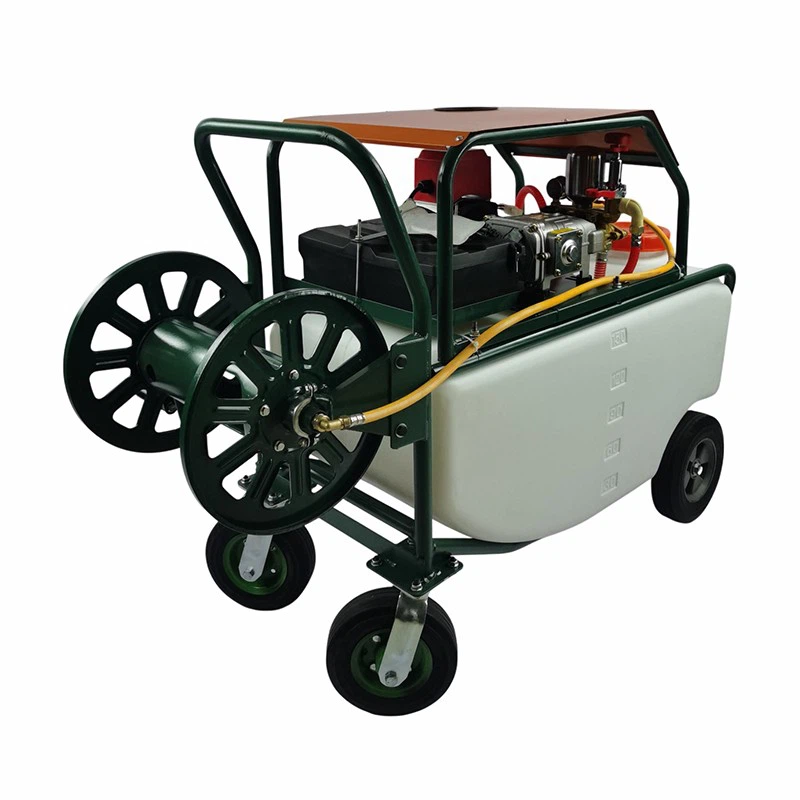
Suppose you're a small - scale farmer with a vegetable garden. You need to spray pesticides and fertilizers on your crops regularly. You could use a 60L Trolley Power Sprayer With Black Frame, which is an electrical spray pump. This pump has a power rating of 300 W. If you use it for 1 hour per day, it will consume 0.3 kilowatt - hours (kWh) of electricity.
If you were to use a gasoline - powered sprayer instead, you'd have to buy gasoline, which is not only more expensive but also less energy - efficient. And let's not forget the hassle of refueling and maintaining the engine.
Tips for Improving Energy Efficiency
Here are some tips to make your electrical spray pump even more energy - efficient:
- Proper Maintenance: Keep your pump clean and well - lubricated. A dirty or poorly maintained pump will have more friction, which means it will use more energy to operate.
- Optimal Nozzle Selection: Choose the right nozzle for your application. A nozzle that creates a fine spray will require less pressure and thus less energy to operate.
- Use a Timer: If you have a regular spraying schedule, use a timer to turn the pump on and off automatically. This can prevent the pump from running longer than necessary.
Conclusion
So, are electrical spray pumps energy - efficient? The answer is yes, but it depends on several factors such as power consumption, pump design, and how you use them. When compared to other types of sprayers, electrical spray pumps can offer significant energy savings, especially when used in the right applications.

If you're in the market for an electrical spray pump, make sure to consider your specific needs and choose a pump that's both energy - efficient and suitable for the task at hand. And if you have any questions or are interested in purchasing an electrical spray pump, feel free to reach out for a procurement discussion. We're here to help you find the best solution for your spraying needs.
References
- "Sprayer Technology Handbook" - A comprehensive guide on different types of sprayers and their technical aspects.
- "Energy Efficiency in Agricultural Machinery" - A research paper that discusses the energy efficiency of various agricultural equipment, including spray pumps.