

The working speed of a crop spray machine is a crucial factor that significantly impacts the efficiency and productivity of agricultural spraying operations. As a crop spray machine supplier, understanding this aspect is essential for providing our customers with the most suitable equipment for their specific needs.
Factors Affecting the Working Speed of Crop Spray Machines
Machine Design and Specifications
The design and specifications of a crop spray machine play a fundamental role in determining its working speed. For instance, the type of nozzle used can have a substantial impact. Different nozzles have varying spray patterns and flow rates. A wide - angle nozzle can cover a larger area in a single pass, potentially increasing the working speed. However, it may also result in less precise spraying. On the other hand, a narrow - angle nozzle provides more targeted spraying but may require more passes to cover the same area, thus reducing the overall working speed.
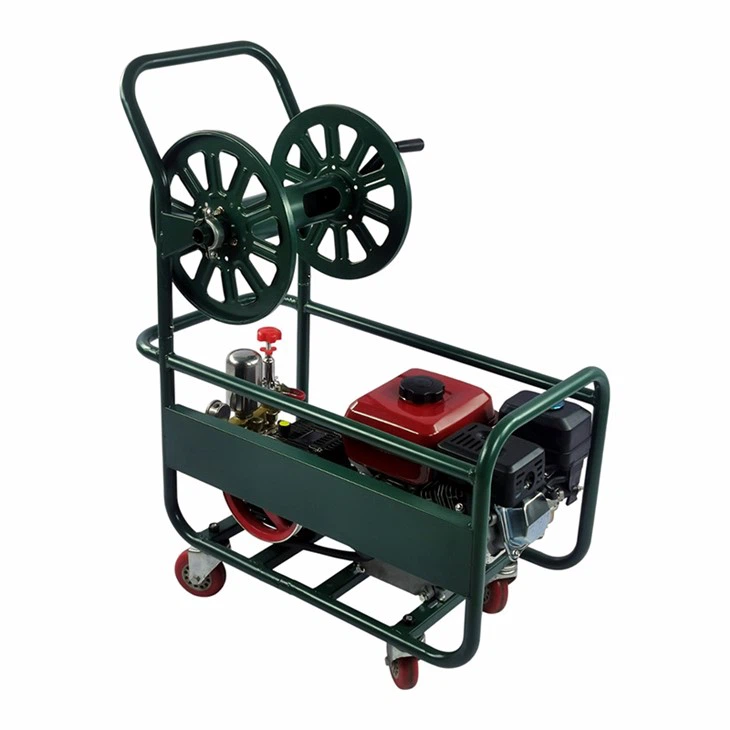
The tank capacity of the sprayer is another important factor. A larger tank means that the machine can carry more spraying solution, reducing the frequency of refills. This allows for continuous spraying over a larger area without interruptions, thereby increasing the working speed. For example, our Power Sprayer Trolley comes with different tank sizes to meet the diverse needs of farmers. A farmer with a large - scale farm may opt for a larger - tank model to minimize downtime for refilling and maximize the working speed.
The power source of the spray machine also affects its working speed. Electric - powered sprayers are generally more consistent in their operation compared to manual or gasoline - powered ones. They can maintain a steady flow rate, which is crucial for achieving a uniform spraying pattern and efficient coverage. Our 50L/60LBattery Powered Trolley Sprayer offers a reliable and consistent power supply, enabling a relatively high working speed with fewer interruptions due to power fluctuations.
Terrain and Field Conditions
The terrain of the agricultural field has a significant influence on the working speed of a crop spray machine. In flat and even fields, the sprayer can move smoothly, allowing for a higher working speed. The operator can maintain a consistent pace without having to slow down or adjust the machine frequently. However, in hilly or uneven terrains, the movement of the sprayer becomes more challenging. The operator may need to reduce the speed to ensure safety and proper spraying. Obstacles such as rocks, trees, or irrigation channels in the field can also impede the movement of the sprayer, reducing the working speed.
The density of the crops in the field is another factor. In fields with dense crops, the sprayer may need to move more slowly to ensure that the spraying solution reaches all parts of the plants. The operator may also need to adjust the spray pattern and flow rate to achieve optimal coverage. In contrast, in fields with sparse crops, the sprayer can move at a faster speed while still providing adequate coverage.

Operator Skill and Experience
The skill and experience of the operator can greatly affect the working speed of a crop spray machine. An experienced operator is more familiar with the operation of the machine and can make quick adjustments to optimize the spraying process. They know how to maintain the correct distance between the nozzle and the crops, adjust the spray pressure according to the field conditions, and move the sprayer at an appropriate speed. For example, an experienced operator can quickly identify if the spraying pattern is uneven and make the necessary adjustments on the go, without having to stop the machine and waste time.
Measuring the Working Speed of Crop Spray Machines
The working speed of a crop spray machine is typically measured in terms of the area covered per unit of time. Common units of measurement include hectares per hour or acres per hour. To calculate the working speed, one needs to consider the width of the spray swath and the forward speed of the machine.
The spray swath width is determined by the number and arrangement of nozzles on the sprayer. For example, if a sprayer has a spray swath width of 5 meters and is moving at a speed of 5 kilometers per hour, the area covered per hour can be calculated as follows:
First, convert the speed from kilometers per hour to meters per hour. Since 1 kilometer = 1000 meters, a speed of 5 kilometers per hour is equal to 5000 meters per hour.
The area covered per hour is then calculated by multiplying the spray swath width by the forward speed. So, 5 meters (spray swath width) × 5000 meters per hour (forward speed)= 25000 square meters per hour. Since 1 hectare = 10000 square meters, the working speed is 2.5 hectares per hour.
Importance of Working Speed in Agricultural Operations
The working speed of a crop spray machine is directly related to the efficiency of agricultural spraying operations. A higher working speed means that more area can be covered in a shorter period of time. This is particularly important during the peak spraying seasons when there is a limited window of opportunity to apply pesticides, fertilizers, or other spraying solutions. For example, in the case of pest control, timely spraying is crucial to prevent the spread of pests and minimize crop damage. A fast - working sprayer can help farmers cover their entire fields quickly, ensuring that the crops are protected in a timely manner.
From an economic perspective, a higher working speed can reduce the labor cost associated with spraying operations. Since less time is required to complete the spraying task, fewer labor hours are needed. This can result in significant cost savings for farmers, especially those with large - scale farms.
Applications of Different Crop Spray Machines Based on Working Speed
Small - Scale Farms
For small - scale farms, portability and ease of use are often more important than extremely high working speeds. Our Power Sprayer for Garden is a great option for small - scale farmers and gardeners. These sprayers are relatively lightweight and easy to maneuver, allowing the operator to cover small areas efficiently. Although their working speed may not be as high as large - scale sprayers, they are well - suited for the needs of small - scale operations. The operator can take their time to ensure precise spraying in a small garden or a few acres of farmland.
Large - Scale Farms
In large - scale farms, high working speed is of utmost importance. Large - capacity and high - powered sprayers are typically used to cover vast areas in a short time. Tractor - mounted sprayers or self - propelled sprayers are commonly employed on large farms. These machines can have wide spray swaths and high - speed movement capabilities, enabling them to cover hundreds of hectares per day. Our range of large - scale crop spray machines is designed to meet the demands of large - scale farmers, providing them with the high working speed they need to efficiently manage their extensive agricultural operations.
Improving the Working Speed of Crop Spray Machines
Machine Upgrades and Maintenance
Regular maintenance of the crop spray machine is essential for maintaining its working speed. Keeping the nozzles clean and in good condition ensures a consistent spray pattern and flow rate. Clogged nozzles can reduce the spraying efficiency and slow down the working speed. Replacing worn - out parts such as seals, hoses, and pumps in a timely manner can also prevent breakdowns and ensure the smooth operation of the machine.
Upgrading the machine with the latest technology can also improve the working speed. For example, installing a more advanced control system can allow for more precise adjustment of the spray pressure and flow rate, optimizing the spraying process. Some modern sprayers are equipped with GPS - guided systems, which can automatically adjust the spraying according to the field boundaries and crop density, increasing the working speed and efficiency.
Training for Operators
Providing training for operators is an effective way to improve the working speed of crop spray machines. Training programs can cover topics such as machine operation, safety procedures, and field management. By enhancing the skills and knowledge of the operators, they can operate the machine more efficiently, make better decisions during the spraying process, and ultimately increase the working speed.
Conclusion
The working speed of a crop spray machine is influenced by multiple factors, including machine design, terrain, operator skill, and field conditions. Understanding these factors is crucial for farmers and operators to optimize the spraying process and achieve high efficiency in agricultural operations. As a crop spray machine supplier, we are committed to providing high - quality sprayers that offer a balance between working speed, precision, and reliability. Our range of 50L/60LBattery Powered Trolley Sprayer, Power Sprayer Trolley, and Power Sprayer for Garden is designed to meet the diverse needs of farmers.
If you are looking for a crop spray machine that can provide high working speed and excellent performance, we invite you to contact us for further discussion and procurement. We are ready to offer you the best solutions for your agricultural spraying needs.
References
- Smith, J. (2020). Agricultural Spraying Equipment: Principles and Practices. Agricultural Publishing Company.
- Brown, A. (2019). Terrain and Its Impact on Agricultural Machinery Operations. Journal of Agricultural Engineering.